

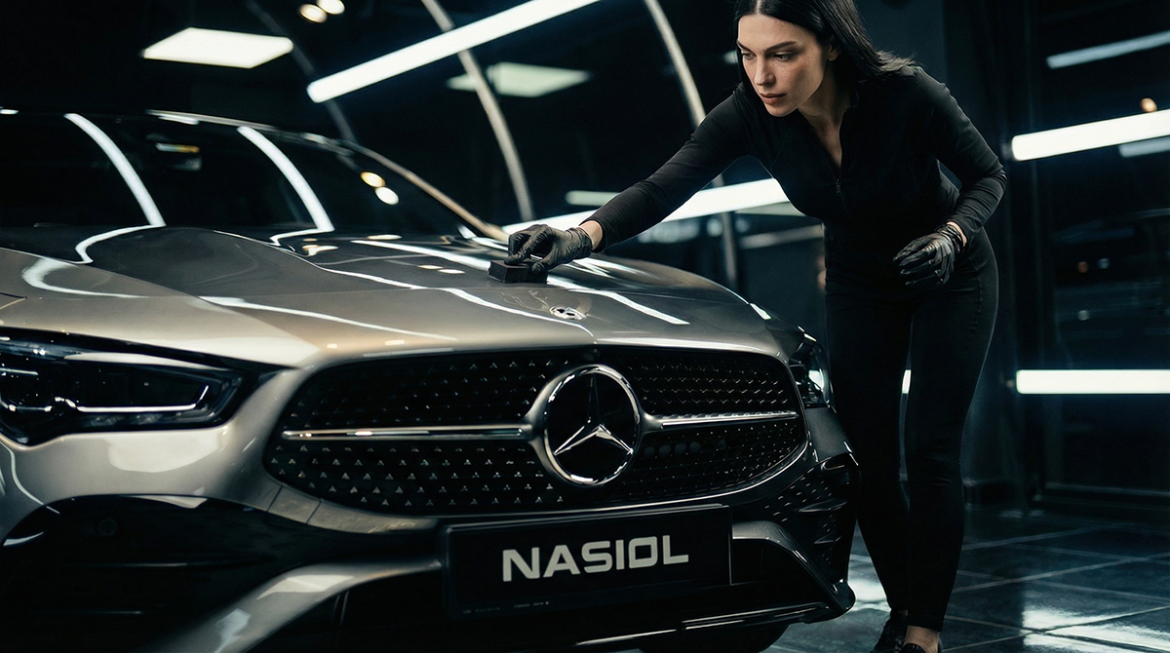
Difference Between 10H and 9H Ceramic Coating
As ceramic coating technology continues to grow in the automotive industry, many users want to understand the differences between key properties before choosing the right product.
Among these options, 9H and 10H ceramic coatings are frequently discussed. But what do these ratings actually represent, and how are they different?
First, let’s clarify a common misconception. Some believe that 10H does not exist in the pencil hardness scale. While it’s true that 10H is not part of the traditional standardized scale, certain advanced manufacturers—such as Mitsubishi—have introduced 10H hardness pencils for extended testing purposes.
For example, the Mitsubishi Hi-Uni 10H pencil has been used by various international laboratories since 2019 as an additional benchmark to evaluate coatings that exceed the traditional 9H hardness level. This development enables more precise testing for enhanced durability and scratch resistance.
So although 10H is not included in the classical scale, it is still a valid and modern reference in advanced coating evaluations.
Now, let’s explore what truly separates 9H vs 10H ceramic coatings, and why this difference matters for paint protection.
What Do 9H and 10H Mean?
The “H” in 9H and 10H ceramic coating refers to hardness, measured using the pencil hardness test.
This test ranges from 6B (softest) to 10H (hardest):
- 9H coating: Resistant to scratches from a 9H pencil
- 10H coating: Offers an even higher level of hardness and resistance
This simple yet effective test provides critical insights into coating durability, quality, and performance, making it essential in industries such as automotive, electronics, and construction.
What is the Pencil Hardness Test?
The pencil hardness test (also known as the Wolff-Wilborn test) is one of the most widely used methods to evaluate coating hardness and scratch resistance.
In this method:
- Pencils with different hardness levels (6B to 10H) are used
- Each pencil is applied to the surface under a fixed angle and pressure
- The hardest pencil that does not leave a visible scratch determines the rating
How Does It Evaluate Ceramic Coatings?
The test is practical, cost-effective, and widely adopted.
- The process starts with the hardest pencil (10H)
- The pencil is applied at a 45-degree angle under constant pressure
- If scratching occurs, softer pencils (9H, 8H, etc.) are tested
- The process continues until no visible damage is observed
To ensure accuracy, the test is repeated on multiple surfaces.
Key Differences Between 9H and 10H Ceramic Coatings
Hardness and Durability
-
9H Ceramic Coatings
Provide excellent scratch resistance, along with strong protection against chemicals, UV rays, and environmental contaminants. Suitable for most vehicles and significantly more durable than traditional waxes. -
10H Ceramic Coatings
Offer maximum hardness, superior scratch resistance, and extended durability. Ideal for high-end vehicles or harsh environmental conditions where long-term protection is critical.
Composition
-
9H Coatings
Typically contain high levels of SiO₂ (silicon dioxide), forming a durable protective layer.
-
10H Coatings
Often include higher SiO₂ content or advanced formulations with siloxane resins and catalysts, enhancing both hardness and performance.
Application and Maintenance
-
9H Coatings
Easier to apply and maintain, making them suitable for both DIY users and professionals.
-
10H Coatings
Require more precise application and controlled conditions. Generally preferred by professional detailers to achieve optimal results.
Is 10H Better Than 9H?
In general, 10H ceramic coating provides a higher level of performance than 9H, especially in terms of durability and scratch resistance.
However, this does not mean 9H coatings are insufficient. Think of 10H as an upgraded version of 9H, offering incremental improvements rather than a completely different category.
It’s also important to note that pencil hardness is only one metric. A coating’s performance also depends on:
- Abrasion resistance
- Chemical resistance
- UV protection
- Gloss retention
- Adhesion strength
- Oxidation resistance
Different coatings may excel in different areas, so hardness alone should not be the only decision factor.
Why Choose Nasiol?
Many products marketed as ceramic coatings are actually based on PDMS (Polydimethylsiloxane) mixed with solvents like IPA or toluene. These are closer to synthetic waxes and typically offer limited durability.
Nasiol Nano Coatings, however, are developed using advanced nanotechnology formulations, delivering significantly higher performance than conventional alternatives.
Here’s what sets Nasiol apart:
- Advanced Technology
Cutting-edge nanotechnology ensures superior protection and performance - Long-Lasting Durability
Both 9H and 10H coatings provide protection that lasts for years - Ease of Application
Designed for both professional use and advanced DIY applications - Wide Product Range
From versatile 9H coatings to premium 10H protection solutions
Products like Nasiol ZR53 and Nasiol NL272 deliver 10H-level scratch resistance combined with protection against UV rays, chemicals, and environmental damage.
Final Thoughts
Understanding the difference between 9H and 10H ceramic coating is essential when selecting the right paint protection solution.
While both offer excellent protection, 10H coatings provide enhanced durability and resistance, making them ideal for users seeking maximum performance.
With its advanced technology and proven formulations, Nasiol ceramic coatings ensure your vehicle receives reliable, long-lasting protection.
Whether you choose 9H or 10H, Nasiol offers the right solution to match your needs.